
Gut Microbiome DNA Test Program at KMB Hospital with Dr. Luknoo
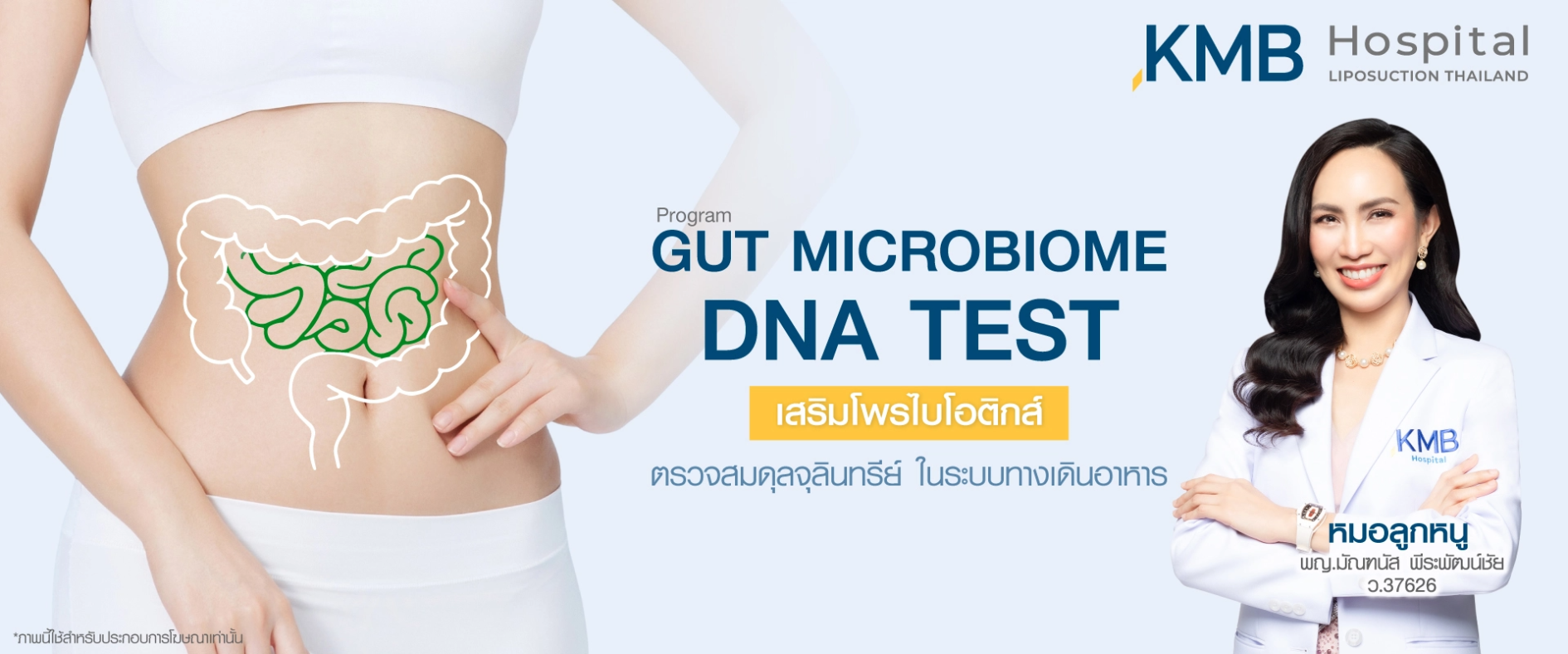
Gut Microbiome DNA Test — Good Health Starts with a Healthy Gut
Every day when we eat, the gut works extremely hard — digesting food, absorbing nutrients, and even serving as home to millions of “microbes.” These microbes come in both good and not-so-good types. If we take good care of them, our body stays strong, we get fewer stomachaches, digestion improves, and they even help support the immune system, reduce allergic reactions, and even help with weight control. But if we eat poorly, stay up late, feel stressed often, don’t drink enough water, or use antibiotics too frequently, the gut microbes fall out of balance. This can lead to problems such as frequent constipation, bloating, dull-looking skin, flare-ups of allergies, or weight issues.

Many people wonder — what exactly are microbes?
In fact, inside our body — especially in the gut — there are tiny living organisms called “microbes.” They’re invisible to the naked eye, but there are enormous numbers of them — trillions, in fact. These microbes help digest food, look after the digestive system, protect the gut from pathogens, and help the body absorb nutrients more effectively.
So how do we know just how healthy our gut is right now?
At KMB Hospital, we offer the Gut Microbiome DNA Test — a DNA analysis of the microbes in your gut to see what your “microbial balance” looks like: whether you currently have too many good or bad microbes. The results tell you clearly how to take care of yourself, what to eat more or less of, so your body can regain its strength from within. What many people find impressive after the test is that it feels like getting to know yourself better. Sometimes we simply feel a little off — tired and sleepy all the time, poor digestion — and assume it’s normal, when in reality the microbes in our gut are sending us a warning signal.
How many types of microbes are there?
Broadly speaking, they can be simply divided into 2 types:
- Good microbes (the helpers) — keep our body strong and the gut functioning well.
- Bad microbes (the troublemakers) — if there are too many of them, digestion suffers, immunity drops, and we become more vulnerable to various diseases. The key is “balance.” Our body should have more good microbes than bad ones for good health.
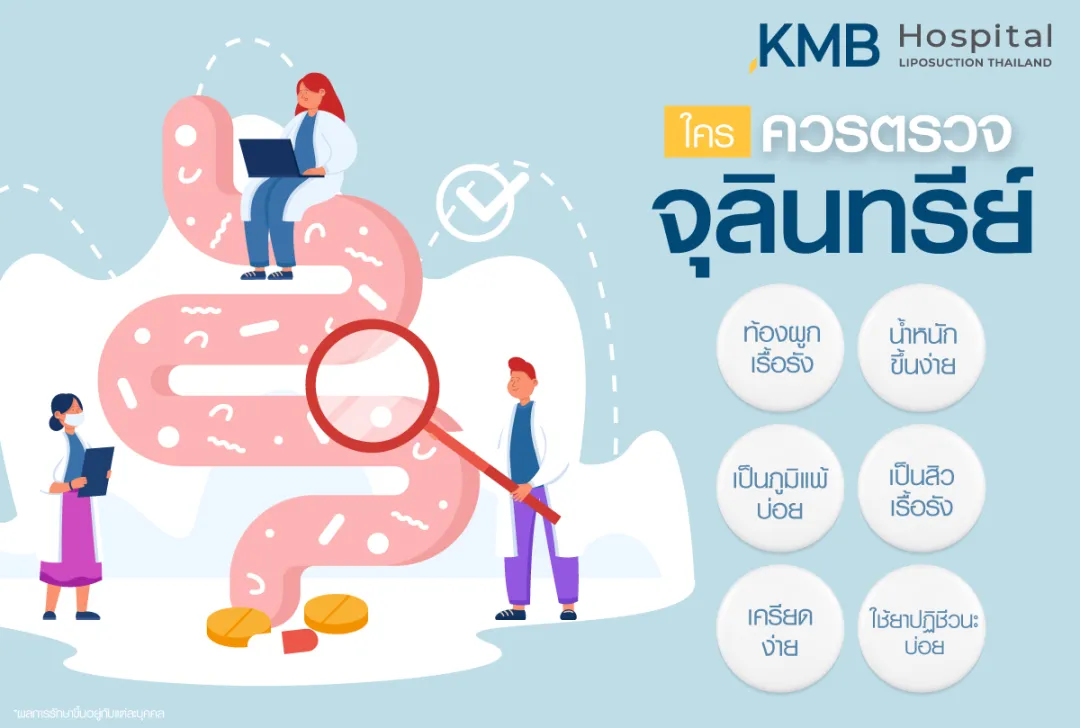
Who should get their microbes tested?
- People with chronic constipation, frequent diarrhea, or easy bloating.
- People who gain weight easily and find it hard to lose.
- People with frequent allergies who catch colds easily.
- People with dull skin or chronic acne.
- People who get stressed easily, can’t sleep, and feel tired all the time.
- People who have frequently used antibiotics.
- People who want to take a preventive approach to their health.

Why should you have your microbes tested?
Many people may think that just eating well is enough to take care of the gut, but in reality every person’s body is different. Testing lets us know how well-balanced our gut is, which microbes are too abundant and which are too scarce, and how we should adjust our diet and self-care to address the issue precisely.
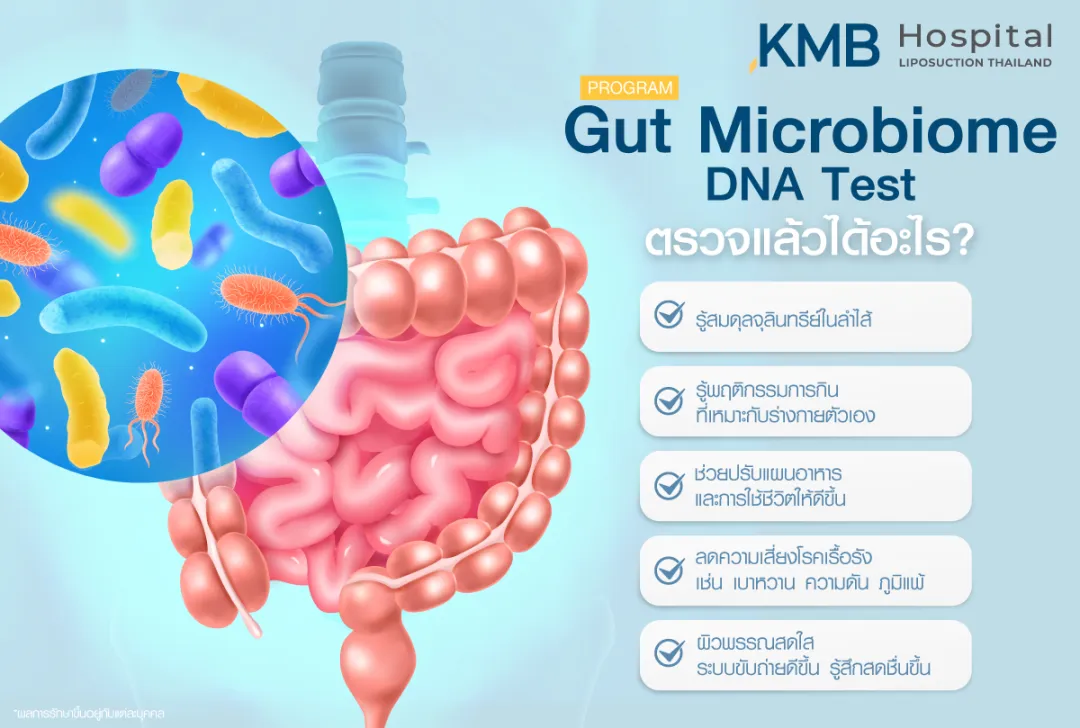
What do you get from the Gut Microbiome DNA Test?
- Know the microbial balance in your gut.
- Know the eating habits that suit your own body.
- Help improve your diet and lifestyle plan.
- Reduce the risk of chronic diseases such as diabetes, high blood pressure, and allergies.
- Brighter skin, better digestion, and feeling more refreshed.
This test is very easy — just collect a stool sample, with no blood draw and no pain at all. The sample is sent to our laboratory, and results are ready within just a few days. Our team of doctors and dietitians will then help recommend a care plan tailored to each individual.
Popular questions from people who want to lose weight
Q: What do microbes have to do with probiotics?
A: The word “probiotics” that many people hear in connection with fermented milk drinks and yogurt actually refers to “good microbes.” Probiotics help top up the good microbes in our gut, but how effective they are depends on the condition of each person’s gut and microbial balance. For some people whose gut is severely out of balance, taking probiotics alone may not be enough — they need to adjust their eating and lifestyle at the same time. Good health can start today. When the gut is healthy, the whole body benefits too. If anyone is interested, you’re welcome to come and ask us any day, or call to speak with our staff — we’re happy to advise.
Q: Why is a stool test used to detect microbes?
A:
1. Many pathogens and microbes live in the gut — when a person has a digestive tract infection such as bacteria, viruses, parasites, or protozoa, these accumulate and are excreted in the stool. A stool sample therefore reflects what microbes are present in the gut.
2. Convenient, safe, and painless — just a small stool sample is enough to culture microbes, examine them under a microscope, or use PCR techniques to detect the pathogen’s DNA right away.
3. Helps identify the cause of abnormal symptoms — such as chronic diarrhea, bloody mucus in the stool, persistent abdominal pain, and so on. A stool test helps distinguish which type of microbe is involved so the right treatment can be chosen.
4. Monitors gut microbiome health — in some cases this is a wellness check to assess the balance of good/bad microbes in the gut as well.


Why choose the Gut Microbiome DNA Test program at KMB Hospital with Dr. Luknoo
A stool test is an important step that shouldn’t be overlooked, because it allows doctors to accurately identify the microbes in the gut, determine the cause of abnormal symptoms, and plan treatment precisely. It is also an easy, safe, and cost-effective method. If you have abnormal symptoms in the digestive system, or want to check your gut microbiome health to look after your overall balance, a stool test is a suitable option.