
Food Intolerance Test Program at KMB Hospital with Dr. Luknoo

No matter how well you eat... you still feel unwell? It may be time to test for “Food Intolerance”
You eat clean, you cut out carbs, you exercise, yet you still feel tired easily, drowsy during the day, your acne won't clear up, and you keep getting headaches, even though you take good care of yourself. These symptoms may be no small matter, and sometimes they are not solely related to hormones or stress, but may stem from “the food we eat every day” without even realizing we are intolerant to it. Welcome to the world of “Food Intolerance,” also known as delayed food sensitivity. It is a type of reaction that produces no rash and no immediate acute symptoms, but gradually causes your health to decline, so slowly that many people mistake it for just ordinary symptoms.

How does Food Intolerance differ from Food Allergy?
Many people confuse “food intolerance” with “typical food allergy,” when in fact they are very different:
Food Allergy (acute allergic reaction)
- Symptoms appear immediately after eating, such as rash, itching, or difficulty breathing
- Severe symptoms such as swelling, redness, chest tightness, and possible life-threatening reactions
- Tested by measuring IgE antibodies
Food Intolerance (delayed food sensitivity)
- Symptoms appear slowly, possibly 2–3 days after eating
- Chronic, cumulative symptoms such as fatigue, headaches, bloating, and persistent acne
- Tested by measuring IgG antibodies together with IC-C3d
In the case of Food Intolerance, the body gradually builds up an immune response to foods we eat regularly, mistaking them for foreign substances and producing IgG antibodies to counter them. This response forms “immune complexes” that accumulate in various parts of the body, causing chronic inflammation and unusual symptoms with no identifiable cause.
Symptoms that may be related to Food Intolerance
These symptoms are commonly found among people with food intolerance:
- Chronic headaches / migraines
- Drowsiness, constant fatigue, and lack of energy
- Bloating, constipation, or diarrhea
- Acne, itchy rashes, or hives with no identifiable cause
- Easy weight gain that is difficult to control
- Mood swings and insomnia
- Joint pain or muscle pain with no apparent cause
- Depression / anxiety
Therefore, if you have chronic, recurring symptoms with no known cause, a Food Intolerance test may be a good starting point for caring for your health from the inside out.

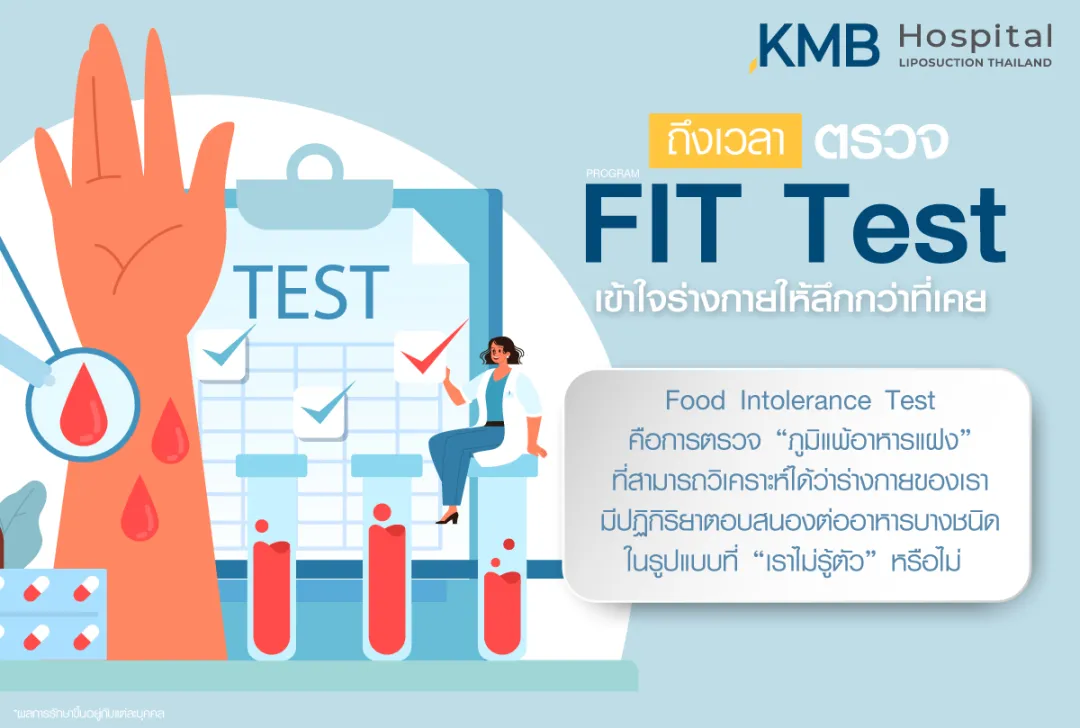
Time to take the FIT test – understand your body more deeply than ever
The FIT Test, or Food Intolerance Test in full, is a test for “food intolerance” that can analyze whether our body reacts to certain foods in ways we are “not aware of.” These reactions do not appear immediately like a typical food allergy, but gradually accumulate in the body and may lead to the undesirable symptoms mentioned above.
What does the Food Intolerance Test check for?
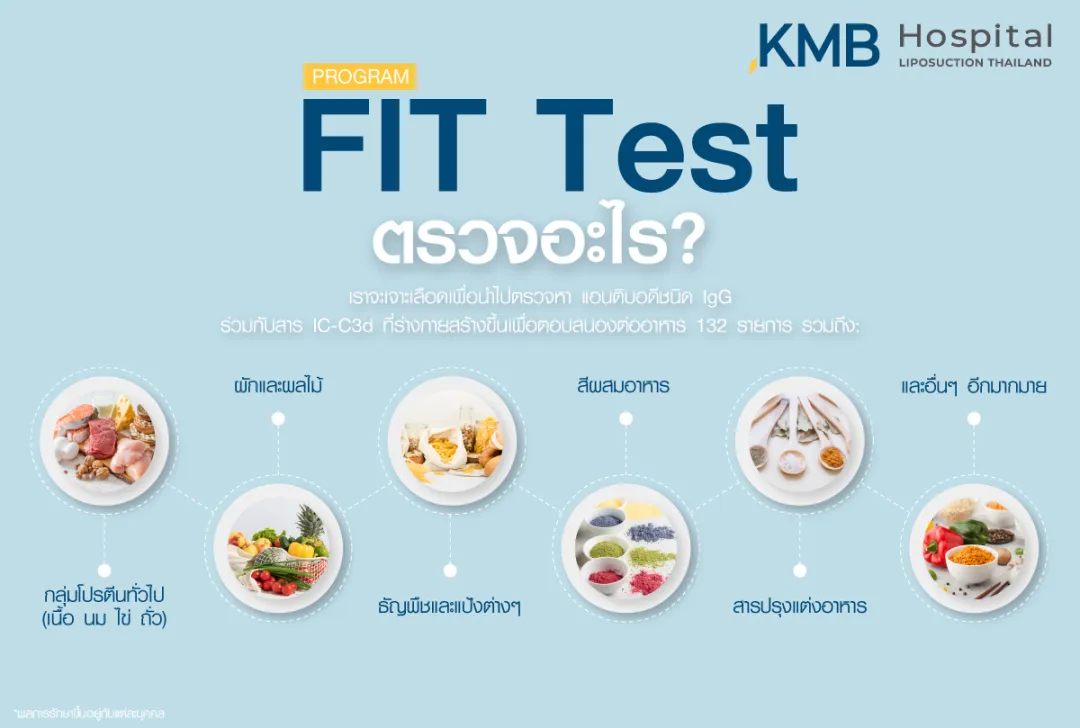
The FIT, or Food Intolerance Test, analyzes the various nutrients that the body responds to in the form of “delayed inflammation.”
We draw a blood sample to test for IgG antibodies together with the IC-C3d marker that the body produces in response to 132 food items, including:
- Common protein groups (meat, milk, eggs, nuts)
- Fruits and vegetables
- Grains and various starches
- Food colorings
- Food additives
- And many more
Why should you take the Food Intolerance Test?
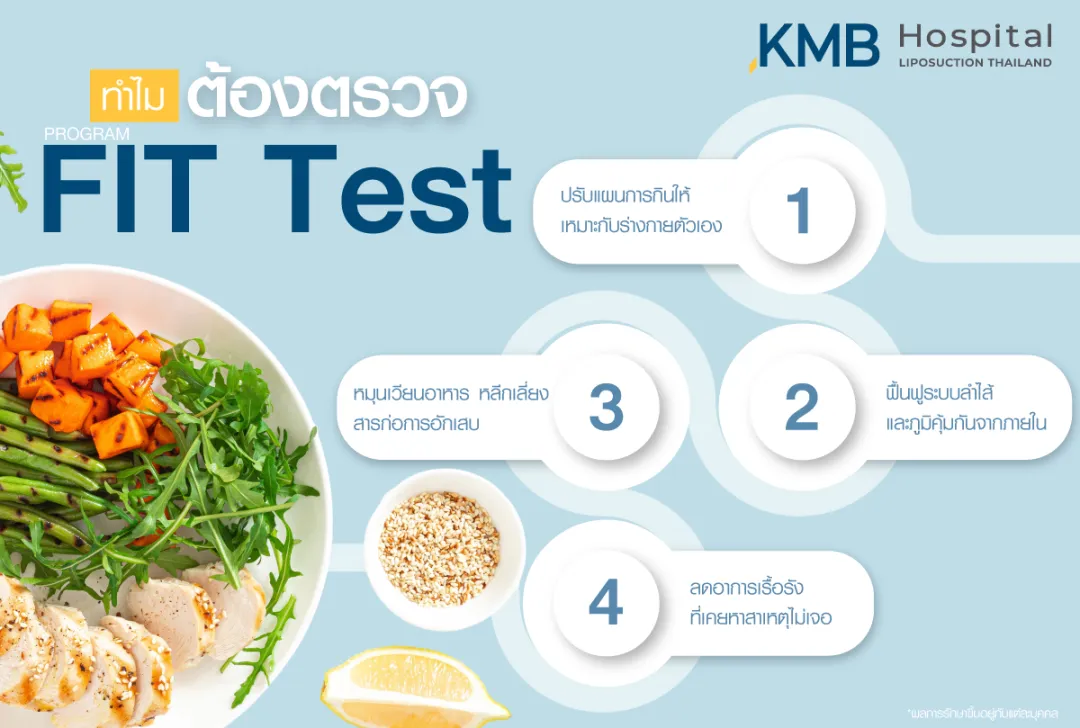
Because simply guessing or avoiding foods based on how you feel may not be enough, the FIT gives a clear answer as to “which foods” are affecting your body without you realizing it. Once you know, you will be able to:
Adjust your eating plan to suit your own body
Rotate your foods and avoid inflammation-triggering substances
Restore your gut system and immunity from within
Reduce chronic symptoms whose cause you could never identify
How can the Food Intolerance Test results help us?
After the test is complete, you will receive a report classifying your body's level of response, as follows: High (Elevated) → should avoid
Moderate (Borderline) → reduce the amount or rotate
Normal → can be eaten as usual
Our doctor will advise you on substitute foods, alternative foods, planning how long to avoid certain foods, as well as balancing the gut so that the body can recover as quickly as possible.
Who is the Food Intolerance Test suitable for?
- People with chronic symptoms such as headaches, rashes, drowsiness, or persistent acne
- People who feel that their body is out of balance but cannot find the cause
- People who want a personalized, individually tailored eating plan
- People who are managing their figure or rebalancing their gut
Knowing which foods are “not right for you” is the starting point for sustainable good health. If you have tried caring for yourself in every way but still feel unwell, a Food Intolerance test may be the answer you have been looking for.
Good health begins with understanding your own body. Don't wait for your health to get worse; start with something close to home, like “the food we eat every day.”
The Food Intolerance Test program at KMB Hospital may be the answer that helps you discover the root cause of symptoms you never understood, and transform your health for the better in a sustainable way.