Bariatric (Gastric Reduction) Surgery Program at KMB Hospital with Dr. Luknoo

What is the Bariatric (Gastric Reduction) Surgery Program?
The Bariatric Surgery program at KMB Hospital with Dr. Luknoo is an option for people who are unable to lose weight through conventional methods such as diet control and exercise. This surgery not only helps achieve effective weight loss, but also effectively reduces the risk of developing obesity-related diseases. It is therefore an appealing option for those who want to take care of their health and reduce the risk of various chronic conditions.
Why choose the Bariatric (Gastric Reduction) Surgery Program
Reduces the risk of serious diseases
The bariatric surgery program helps reduce the risk of chronic diseases such as diabetes, high blood pressure, and heart disease, which are associated with being overweight.
Boosts confidence and mental well-being
Effective weight loss helps increase confidence in your figure and overall health, positively affecting your emotional state and quality of life.
Extends life expectancy and improves quality of life
Better weight control and health can help you live longer and reduce the risk of health complications.
Prevents deterioration of joints and muscles
Weight loss reduces the burden placed on the joints and muscular system, lowering the risk of osteoarthritis and various inflammatory conditions.
Who is the Bariatric (Gastric Reduction) Surgery Program suitable for?
1. People with a body mass index (BMI) of 40 or higher
People with a BMI at this level are usually severely obese and are at high risk of weight-related diseases such as:
- Cardiovascular disease
- Type 2 diabetes
- High blood pressure
- High blood lipids (cholesterol)
2. People with a BMI between 35 and 39.9 who have an obesity-related medical condition
For those with a BMI in this range who also have a comorbidity caused by obesity, such as:
- Type 2 diabetes
- Obstructive Sleep Apnea (OSA)
- Non-alcoholic fatty liver disease
3. People who cannot lose weight effectively through other methods
Those who have tried to lose weight through standard methods such as diet control, exercise, or weight-loss medication, but without success, may consider bariatric surgery as an option.
4. People who are ready for and understand the surgery
Bariatric surgery is not a shortcut to weight loss, but a process that requires the patient's cooperation in changing their lifestyle after surgery, such as:
- Changing eating habits
- Exercising regularly
- Following up with the doctor and healthcare team
5. People who have been assessed and recommended by a doctor
The relevant medical team will assess the patient's readiness, which includes:
- An overall health examination
- An analysis of potential complications
- Consideration of the patient's mental state and ability to adapt
The bariatric surgery program for weight loss may not be the right choice for everyone, so it is essential to be assessed and advised by a doctor to ensure that this treatment is suitable for you. The decision to undergo surgery should be based on each individual's overall health and goal of achieving a better quality of life.
At what weight should you consider gastric reduction surgery?
Analysis using the body mass index (BMI) calculation is an index used to measure the balance between body weight (kilograms) and height (centimeters), which can indicate what range a person's body currently falls into, from severely obese to underweight. The BMI calculation to find the body mass index = body weight [kilograms] ÷ height [meters] squared.
- Below 18.5: Underweight
- 18.5 - 24.9: Normal weight
- 25 - 29.9: Overweight
- 30 and above: Obese
- 40 and above: Severely obese
Regarding the body mass index (BMI) and consideration of the bariatric surgery program at KMB Hospital under the care of Dr. Luknoo: people with a very high BMI may be advised to undergo different treatment methods, such as the bariatric surgery program. This is especially the case for those with a BMI of 40 or higher, or a BMI of 35 or higher combined with obesity-related health problems.
Measuring waist circumference to assess risk
Measuring waist circumference is another way to assess the risk of chronic diseases, particularly those associated with abdominal fat. The recommended waist circumference criteria are as follows:
- Men: Should not exceed 102 centimeters
- Women: Should not exceed 80 centimeters
If your waist circumference exceeds these limits, it may be a sign of an increased risk of developing diabetes and heart disease.
Benefits of the Bariatric (Gastric Reduction) Surgery Program
1. Effective and sustainable weight loss Controlling the amount of food consumed helps you lose weight effectively and maintain the results over the long term.
2. Reduces the risk of obesity-related diseases Helps lower the chance of developing obesity-related diseases such as diabetes, high blood pressure, and heart disease.
3. Improves overall health and quality of life Increases mobility, reduces joint pain, improves the respiratory system, and enhances sleep quality.
4. Promotes mental health and self-confidence Reduces stress, boosts confidence, and improves self-image.
5. Improves eating habits and builds discipline in health care Encourages you to adjust your eating habits alongside taking care of your health according to your doctor's advice.
6. Reduces complications and dangerous chronic diseases Lowers the chance of developing chronic diseases and helps the body function more efficiently.
Drawbacks of Bariatric (Gastric Reduction) Surgery
- Complications: risk of infection, bleeding, and blood clots
- Reduced nutrient absorption: risk of vitamin B12, iron, and calcium deficiency
- Gastrointestinal side effects: bloating, diarrhea, nausea (Dumping Syndrome)
- Emotional effects: mood swings, risk of depression
- Weight may return if you do not adjust your eating habits and exercise
How many types of Bariatric (Gastric Reduction) Surgery Programs are there?
There are several types of gastric reduction programs, with the most common being:
Sleeve Gastrectomy
This is surgery to reduce the size of the stomach by removing part of it, shaping the remaining stomach into a small tube, which helps reduce the amount of food consumed.
Roux-en-Y Gastric Bypass
This is surgery that reroutes the digestive tract to reduce nutrient absorption, resulting in effective weight loss.
At KMB Hospital, under the care of Dr. Luknoo, our surgeons specializing in advanced laparoscopic surgery assess and select the surgical method most suitable for each individual, prioritizing health and safety. The bariatric surgery program is an option for people who are unable to lose weight through conventional methods such as diet control and exercise. It also helps reduce the risk of obesity-related diseases such as diabetes and high blood pressure.
Types of Gastric Reduction Programs at KMB Hospital
Gastric Banding
A band is placed around the stomach to reduce the amount of food consumed, but it has become less popular these days due to its limited effectiveness. The bariatric surgery program using the Single Port Surgery technique operates through just one small incision, reducing scarring, speeding up recovery, and lessening pain.
Sleeve Gastrectomy
Removes 75-80% of the stomach, reducing the amount of food consumed and hunger hormones, helping you lose weight effectively.
Gastric Bypass (stomach reduction combined with intestinal rerouting)
Reduces the size of the stomach and reroutes digestion to decrease calorie absorption, suitable for those who want intensive weight loss.
Sleeve Plus (SG-PJB) weight-loss gastric surgery program
A further development of the Sleeve Gastrectomy that reconnects the small intestine to reduce food absorption and increase the effectiveness of weight loss.
Endoscopic Sleeve Gastroplasty by OverStitch
The stomach is sutured using an endoscopic technique performed through the mouth, with no surgical incision, allowing for fast recovery and effective weight loss.
Gastric Balloon
A balloon is placed in the stomach to reduce the amount of food consumed. This is a non-surgical, removable method.
At KMB Hospital, under the care of Dr. Luknoo and our surgical team, we are committed to providing safe, high-quality service. If you are considering a weight-loss method suited to your health, we recommend consulting directly with our surgeons to receive the most appropriate and safest advice for comprehensive weight loss and health care.
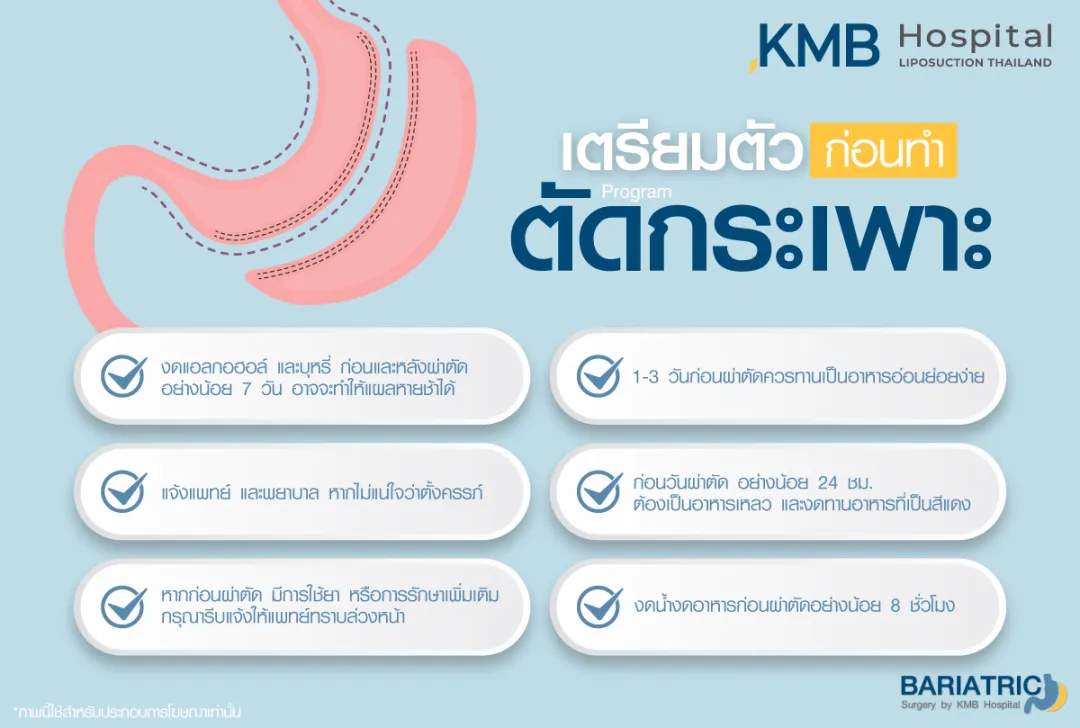
Preparing for the Bariatric (Gastric Reduction) Surgery Program (Bariatric Surgery)
1. Physical examination and health assessment by a doctor
Patients undergoing surgery should have a thorough physical examination by a doctor at least 2 weeks in advance. They must also undergo a mental health assessment to ensure they are ready for the surgery.
2. Following nutritional advice
Follow the advice of the nutrition specialist and aim to lose about 3-5 kilograms of body weight before undergoing surgery.
3. Managing underlying conditions
If you have an underlying condition, you should have the condition assessed and confirm that its symptoms are properly controlled. You should inform your doctor about any medications you take regularly.
4. Refraining from certain supplements and medications
You should stop taking vitamins, dietary supplements, and Aspirin or NSAIDs at least 7 days before surgery. If you take medication that must be taken regularly, you should consult your doctor first.
5. Refraining from alcohol and cigarettes
You should avoid alcohol and smoking for at least 7 days before and after surgery, as they may slow down wound healing.
6. Providing additional medical information
If there is any possibility of pregnancy, you should inform your doctor in advance. If you are using any medication or undergoing additional treatment, you should let your doctor know before the day of surgery.
7. Adjusting your diet before surgery
During the 1-3 days before surgery, you should eat easily digestible food. In the 24 hours before surgery, you should consume liquid food and avoid red-colored foods.
8. Abstaining from food and drink before surgery
You should abstain from food and drink for at least 8 hours before surgery to prevent complications during the procedure.
Steps of the Gastric Reduction Surgery at KMB Hospital with Dr. Luknoo
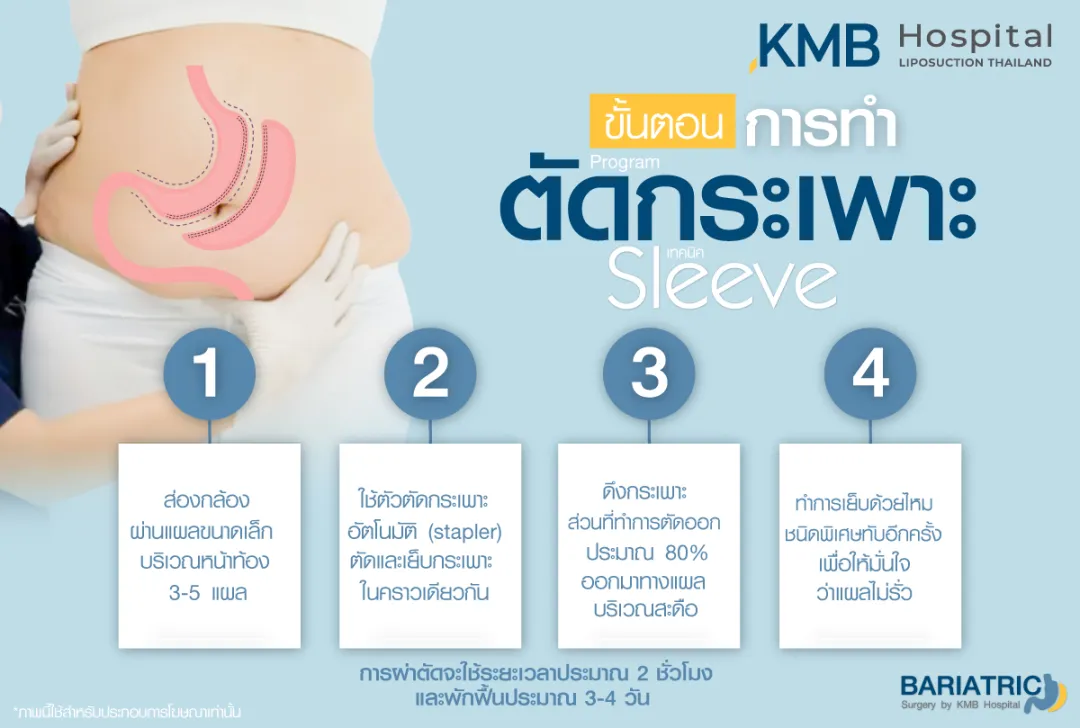
1. Administering anesthesia for safety during surgery
The patient is given general anesthesia so that they remain unconscious and free of pain throughout the entire surgery.
2. Performing the surgery using the laparoscopic technique (Laparoscopic Surgery)
A small camera and surgical instruments are used through small incisions to perform the surgery, reducing pain and allowing for a faster recovery.
3. The chosen surgical technique for weight loss
- Sleeve Gastrectomy: removing most of the stomach so that it becomes smaller
- Gastric Bypass: cutting the stomach and connecting it to the small intestine to reduce nutrient absorption
- Balloon Placement / OverStitch: using a balloon or suturing the stomach to adjust its size and function without removing the stomach
4. Closing the wound and post-operative care
The wound is closed with self-dissolving sutures, along with close monitoring of the patient in the recovery room for safety.
Care after the Bariatric (Gastric Reduction) Surgery Program
- Respiratory care After surgery, the medical and nursing team provides close care, using a temporary oxygen mask for safety.
- Nutritional support In the early stages, the patient receives nutrients intravenously to help the body recover.
- Movement for recovery Once dizziness subsides, the doctor recommends moving the body, such as sitting up or walking, to reduce the risk of complications.
- Monitoring of symptoms Nurses continuously check vital signs such as blood pressure, heart rate, and oxygen levels.
- Adjusting eating habits Appropriate nutrition is recommended, and eating habits are adjusted to suit the new digestive system.
- Follow-up with the doctor You should attend appointments as scheduled to evaluate the treatment results and adjust your health care plan.
KMB Hospital, under the care of Dr. Luknoo, is committed to attentive care at every step.
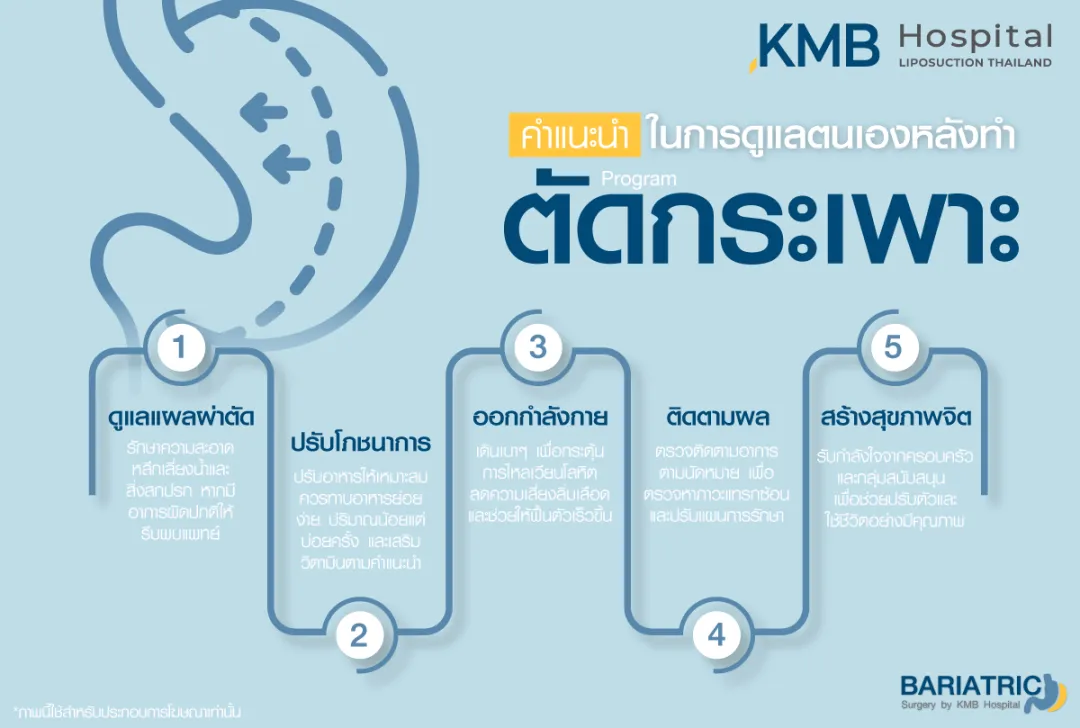
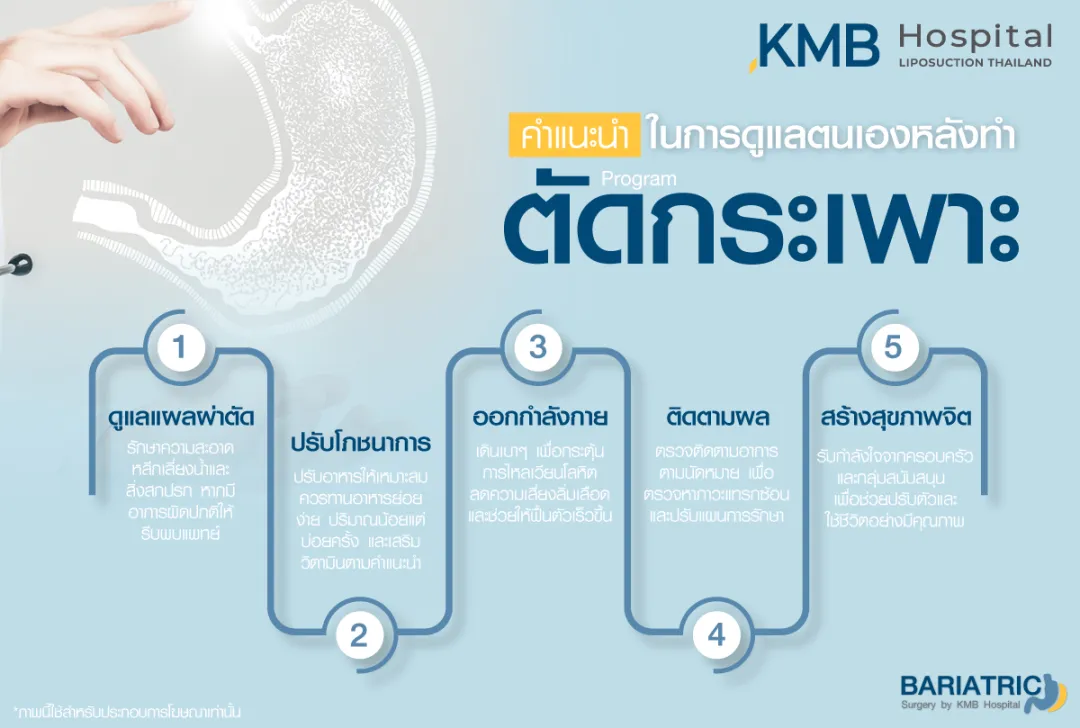
Self-care advice after the Bariatric (Gastric) Surgery Program
- Wound care Keep it clean and avoid water and dirt. If any abnormal symptoms occur, see a doctor promptly.
- Nutrition for recovery Adjust your diet appropriately. You should eat easily digestible food in small but frequent portions, and take vitamin supplements as advised.
- Light exercise Take gentle walks to stimulate blood circulation, reduce the risk of blood clots, and help you recover faster.
- Health follow-up Attend follow-up appointments as scheduled to check for complications and adjust the treatment plan.
- Strengthening mental health Draw encouragement from family and support groups to help you adjust and live life with quality.

The risk of weight gain after the Bariatric (Gastric Reduction) Surgery Program
The bariatric surgery program is an effective method for losing weight, but without changes to eating and lifestyle habits, weight gain may occur again, because the stomach has the ability to stretch when food is eaten in large amounts or too frequently.
Reasons weight returns after the Bariatric (Gastric Reduction) Surgery Program
1. Unbalanced eating habits
Returning to consuming high-calorie foods, sweets, or snacking between meals can cause weight gain without you realizing it.
2. Irregular or insufficient exercise
A lack of physical activity or regular exercise affects the metabolic rate and increases the chance of becoming obese again.
3. The body's adaptation after surgery
Over time, the stomach may stretch, allowing you to eat more, so eating habits must be continuously controlled.
4. Psychological and emotional factors that affect eating
Stress, depression, or comfort eating all affect consumption behavior and can lead to weight gain.
5. Lack of continuous follow-up and care with a doctor
Not seeing your doctor or nutritionist as scheduled may mean missing the opportunity to adjust habits and address problems from the early stages.
FAQs about the Bariatric (Gastric Reduction) Surgery Program
Q: After the surgery program, can I eat normally, or will my life change forever?
A: After the bariatric surgery program, your eating habits will change permanently, but this does not mean you will go hungry or lose the joy of eating. In the early stages you must adjust by eating liquid food, then soft food, then normal food, in that order. Once you have recovered, you can eat normally, but in smaller amounts, and you should choose nutritious foods, such as focusing on protein, reducing fried foods, chewing thoroughly, and avoiding carbonated drinks to prevent complications.
Q: I'm not very overweight, but I can't lose weight. Should I consider surgery?
A: The bariatric surgery program is suitable for those who are severely obese (BMI ≥ 35) or have comorbidities such as diabetes, high blood pressure, or high blood lipids. If you are only slightly overweight but cannot lose weight, you should first try adjusting your eating habits and exercising. If your BMI is between 30 and 34.9, surgery may be considered in cases where there are health problems caused by being overweight and you have received a doctor's recommendation, because gastric reduction surgery is only one “tool” to help, not a “shortcut” to weight loss. After treatment, patients must have discipline in caring for themselves after surgery to achieve good results.
Q: After the gastric reduction surgery program, will diabetes and blood pressure really improve, or only temporarily?
A: The bariatric surgery program can genuinely help control or alleviate diabetes and high blood pressure, especially in those who are also obese. Research has found that type 2 diabetes may improve or disappear in some cases, due to changes in insulin levels and hormones related to metabolism.

Why choose the Bariatric (Gastric Reduction) Surgery Program at KMB Hospital with Dr. Luknoo
Cared for by specialist surgeons in advanced laparoscopy
Our medical team is ready to provide personalized treatment and long-term health planning. With a team of specialist surgeons skilled in advanced laparoscopic surgery, the surgical incisions are small, allowing for a fast recovery.
Close care and follow-up in a private group
Our medical team provides continuous nutritional and health-care advice, with support throughout 1 year to help you reach your goals and maintain good long-term health.
Premium Service
With nurses providing close care throughout the entire process, you receive exceptional care from the initial health check and treatment planning through to continuous follow-up for up to 1 year, without long waiting times, along with a medical team that provides close guidance throughout the treatment.